A signal generator supplies a known, stable stimulus: a clean CW tone, an analog or pulse-modulated carrier, or a complex digitally modulated waveform. With it, engineers characterize receivers, amplifiers, mixers and complete systems against a reference. The figures that matter most are spectral purity (phase noise and spurious content), output power and level accuracy, and, for vector models, modulation bandwidth and EVM. Together they decide whether a generator can serve as a local oscillator, a receiver-sensitivity source or a wideband test signal for 5G NR and radar work.
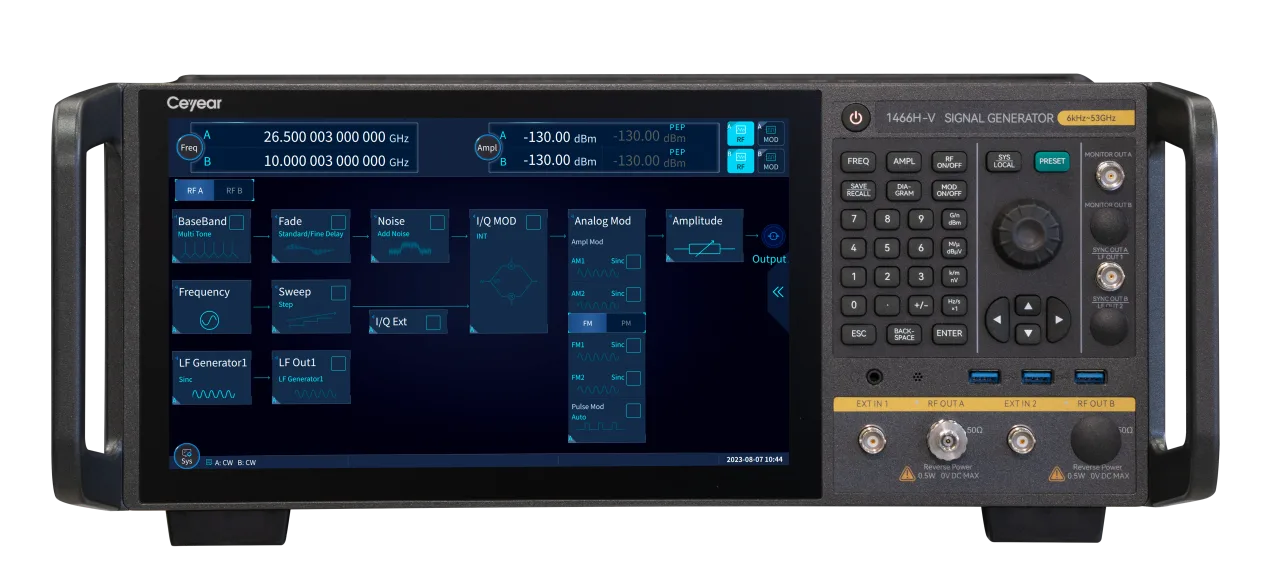
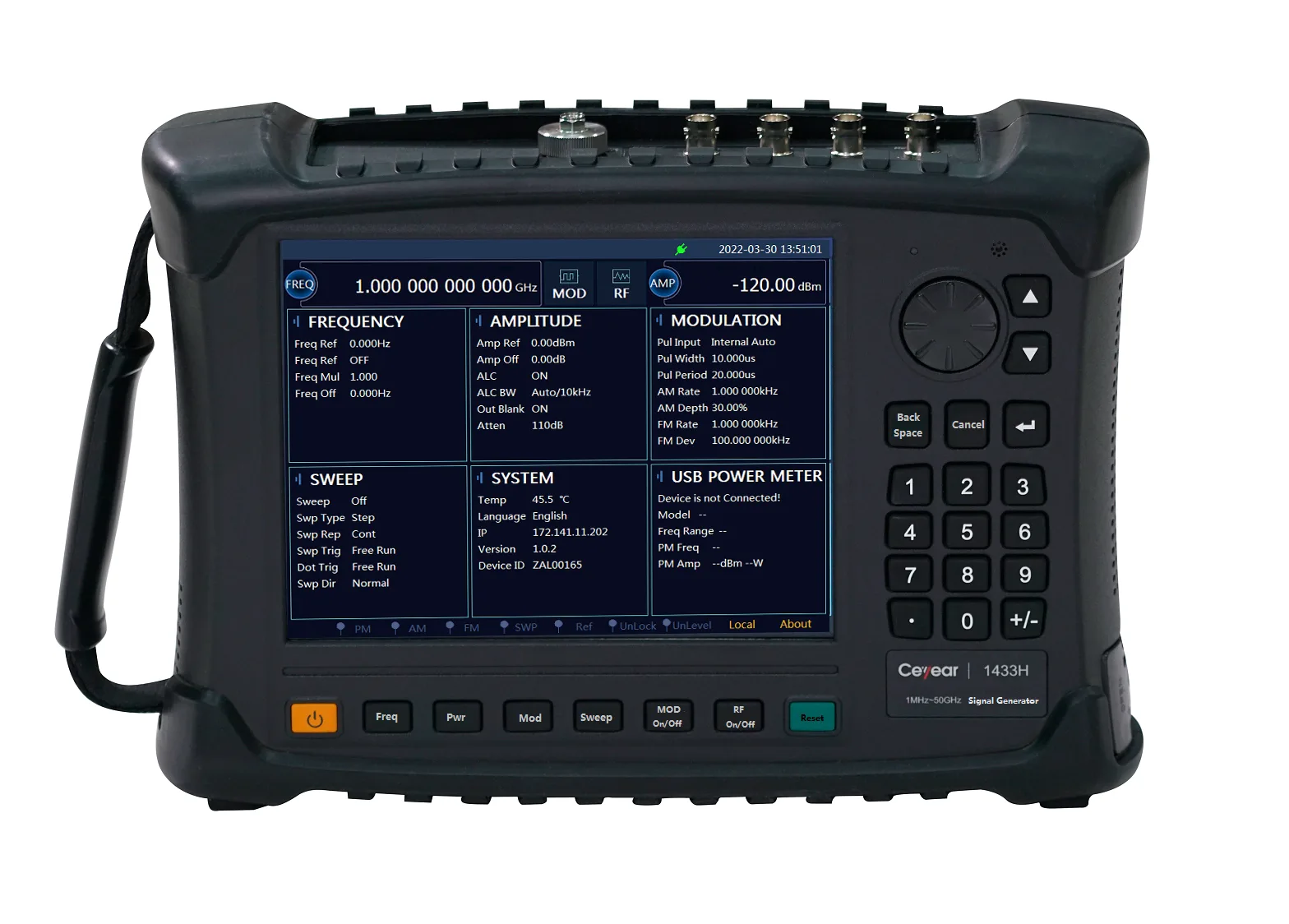
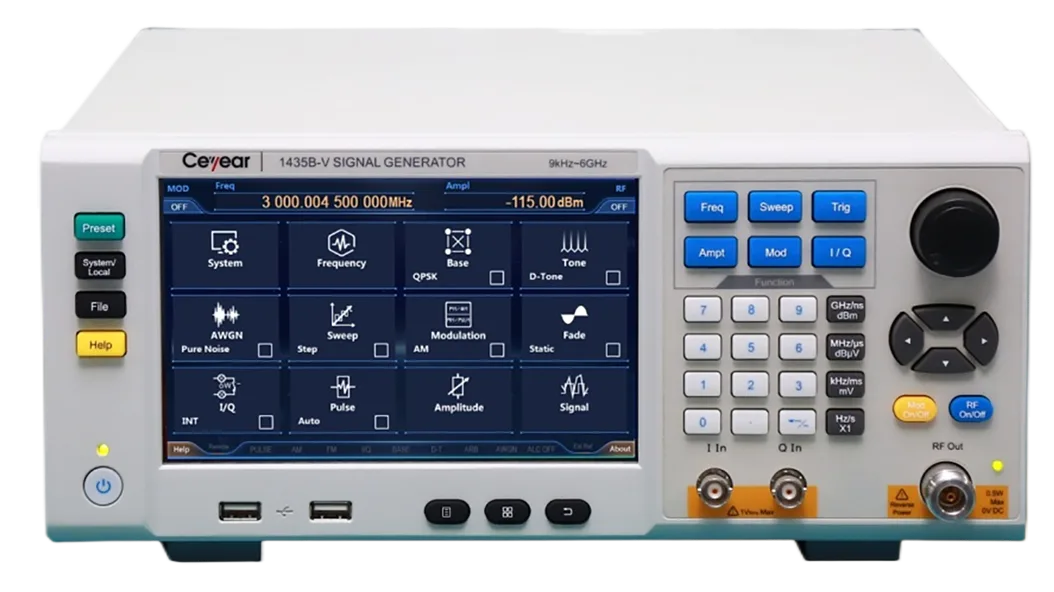
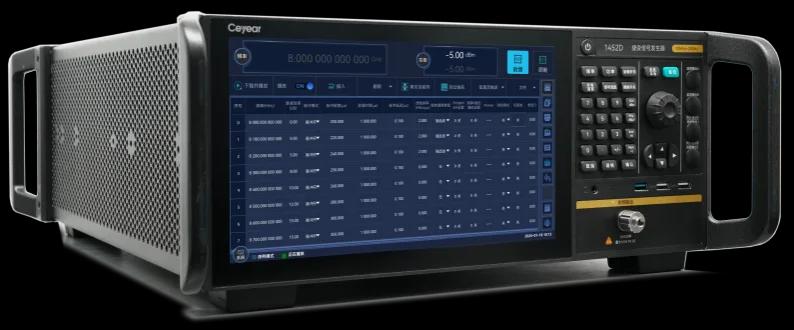
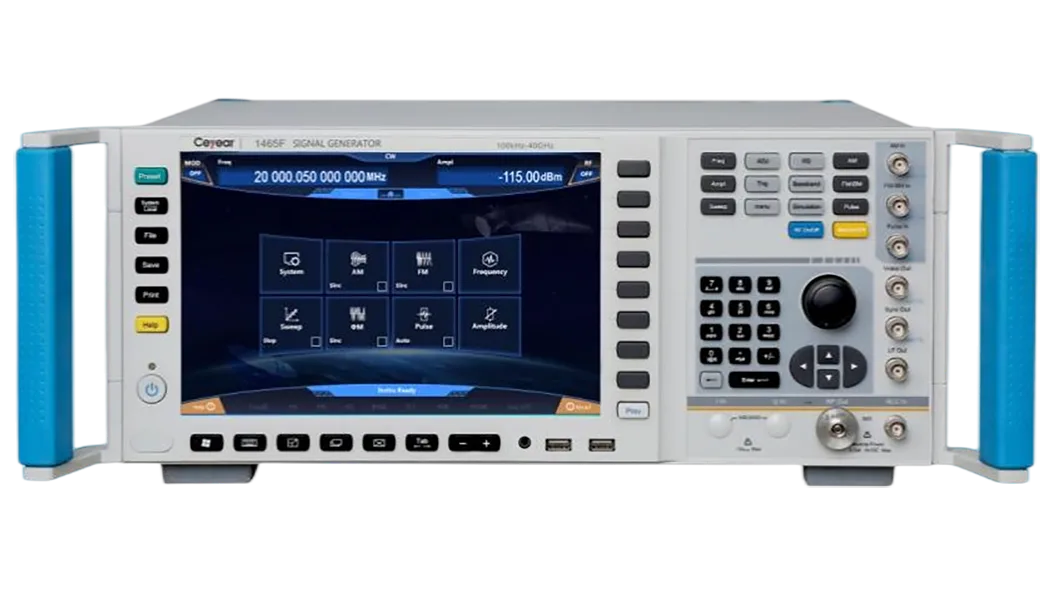
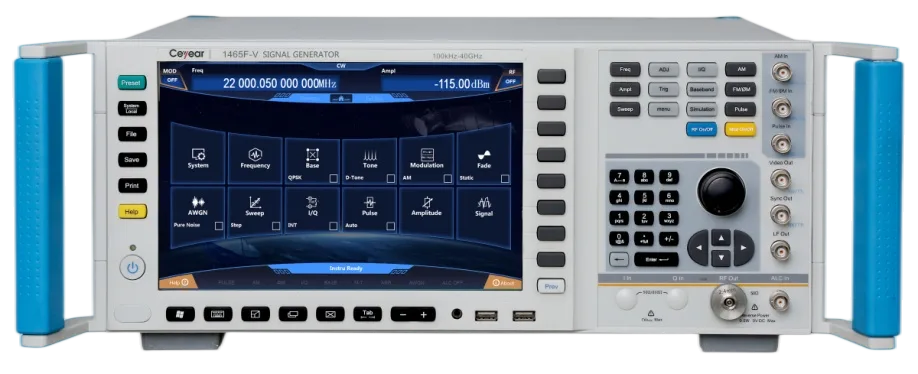
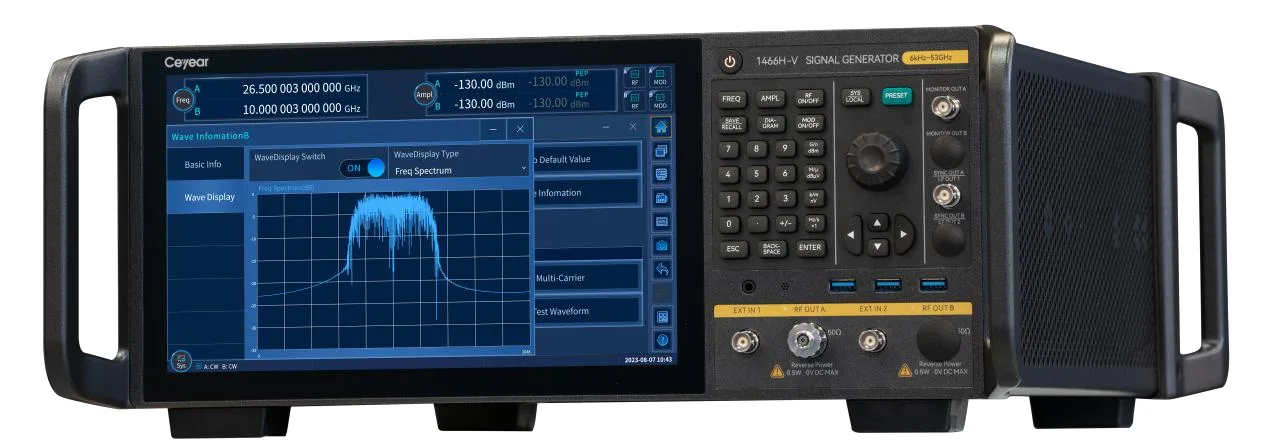
The range spans several families. The 1466 analog generators cover 6 kHz up to 110 GHz depending on the model, with up to two channels, and the 1466-V vector version adds internal modulation bandwidth of up to 2 GHz. The 1465 and 1465-V reach 67 GHz, while the 1435 and 1435-V address general RF and microwave work up to 40 GHz and 6 GHz respectively. The 1452D/G agile generators switch frequency and power in 150 ns or less up to 44 GHz, and the 1433 is a handheld source up to 50 GHz.