Skip to content
SeaGOAT Electronics logo

Power Meters & Power Sensors

CW, peak, waveguide and USB power sensors from kHz to 750 GHz

8 product families

8 instrument families

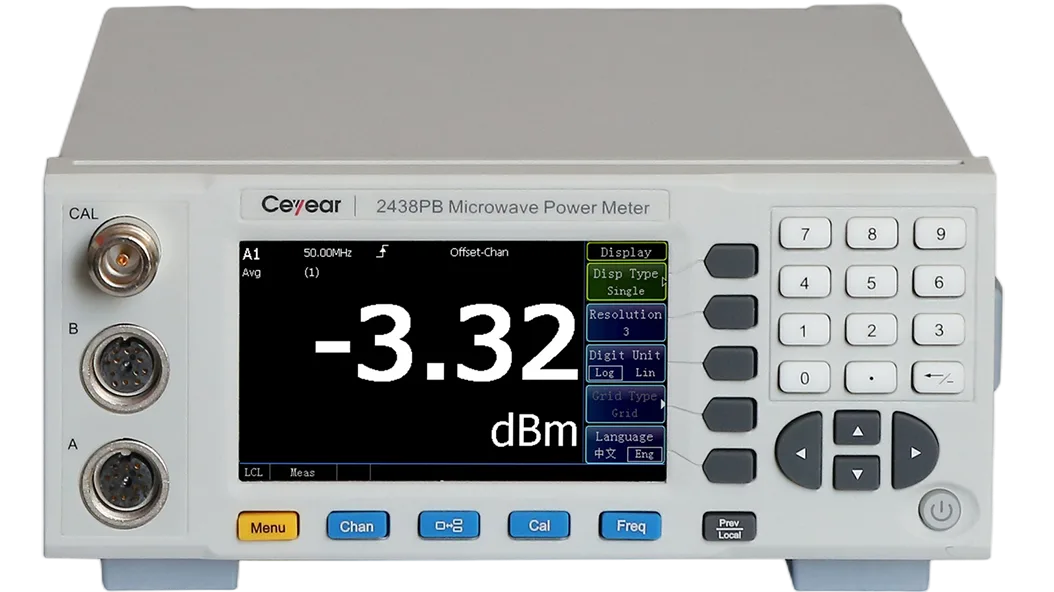
  • 2438PB microwave power meter, front view
    Power Meters & Power SensorsBenchtop

    2438 Series Microwave Power Meter

    2438CA/CB/PA/PB · 4 models

    Single- or dual-channel microwave power meter for CW, peak and CCDF measurements from 9 kHz to 500 GHz, depending on the connected sensor.

    Frequency
    9 kHz – 500 GHz
    Power range
    -70 … +50 dBm
    View details
  • Power Meters & Power SensorsSensor

    71710 Series CW Power Sensors

    71710A/D/E/F/LB · 5 models

    Coaxial diode CW power sensors for the 2438 power meter, covering 9 kHz to 67 GHz with power ranges down to -70 dBm.

    Frequency
    9 kHz – 67 GHz
    Power range
    -70 … +20 dBm
    View details
  • Power Meters & Power SensorsSensor

    81702 Series Peak Power Sensors

    81702D/E/F/L · 4 models

    Coaxial peak power sensors for the 2438PA/PB meter, 50 MHz to 67 GHz, with ≤ 10 ns rise time for fast pulse envelope analysis.

    Frequency
    50 MHz – 67 GHz
    Power range
    -20 … +20 dBm
    View details
  • Power Meters & Power SensorsSensor

    81703 Series Peak Power Sensors

    81703D/E/F/L · 4 models

    Coaxial peak power sensors for the 2438PA/PB meter, 50 MHz to 67 GHz, with a wide -40 dBm to +20 dBm pulse power range.

    Frequency
    50 MHz – 67 GHz
    Power range
    -40 … +20 dBm
    View details
  • Power Meters & Power SensorsSensor

    87115 Series Waveguide Power Sensors

    87115NA/N/P/QA/Q/R/SA/S/TA/T/U · 11 models

    Waveguide power sensors from 50 GHz to 750 GHz in eleven bands, with a -40 dBm to +20 dBm power range, for millimeter-wave and terahertz power measurement.

    Frequency
    50 GHz – 750 GHz
    Power range
    -40 … +20 dBm
    View details
  • Power Meters & Power SensorsSensor

    87230 Series USB CW Power Sensors

    87230/87231/87232/87233 · 4 models

    USB continuous-wave power sensors from 9 kHz to 40 GHz that add power measurement to spectrum analyzers, signal generators and network analyzers.

    Frequency
    9 kHz – 40 GHz
    Power range
    -60 … +20 dBm
    View details
  • Power Meters & Power SensorsSensor

    87234 Series USB Peak Power Sensors

    87234D/E/F/L · 4 models

    USB peak/average power sensors from 50 MHz to 67 GHz that add pulse power measurement to spectrum analyzers and signal generators.

    Frequency
    50 MHz – 67 GHz
    Power range
    -45 … +20 dBm
    View details
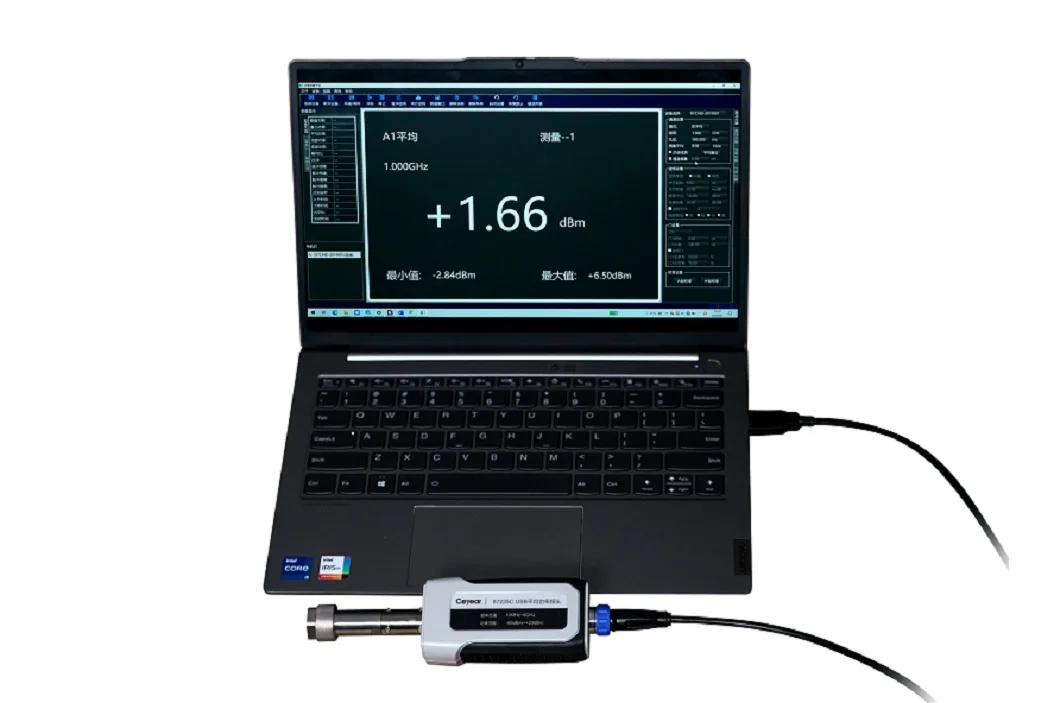
  • 87235 series USB average power sensor connected to a laptop
    Power Meters & Power SensorsSensor

    87235 Series USB Average Power Sensors

    87235B/C/D/F/FA/H/L · 7 models

    USB 2.0 diode average power sensors from 8 kHz to 67 GHz with power ranges from -70 dBm and accuracy down to ±0.20 dB, for CW, pulsed and modulated signals.

    Frequency
    8 kHz – 67 GHz
    Power range
    -70 … +26 dBm
    View details

About Power Meters & Power Sensors

A power meter with a calibrated sensor is the reference for absolute RF power. Spectrum analyzers and VNAs measure relative levels very well, but transmitter output, amplifier gain, source leveling and the power calibration of other instruments are usually traced back to a power sensor. Average (CW) sensors offer high accuracy and wide dynamic range, while peak sensors with fast rise times follow the envelope of pulsed and modulated signals, such as radar pulses or TDD bursts.

The 2438 power meters work with CW or peak sensors covering 9 kHz to 750 GHz, depending on the sensor, with CW measurements from −70 dBm to +50 dBm. Coaxial sensors include the 71710 CW series up to 67 GHz and the 81702 and 81703 peak series, with rise times down to 10 ns or less. The 87115 waveguide sensors extend from 50 GHz to 750 GHz, and the USB sensor families (87230 CW, 87234 peak and 87235 average) cover up to 67 GHz.

How to choose

  1. 01

    Sensor type

    Use average (CW) sensors for continuous signals and for the best accuracy and dynamic range. Choose peak sensors when you need pulse parameters, peak-to-average ratio or time-gated power on radar, TDD or burst signals.

  2. 02

    Frequency and interface

    Coaxial sensors cover up to 67 GHz; above that, waveguide sensors are specified per band (for example 75–110 GHz or 325–500 GHz). Match the connector or waveguide flange to your test port to avoid extra adapters and their mismatch.

  3. 03

    Power range

    Check that the expected levels fall inside the sensor's range, for example −70 dBm to +20 dBm on several CW sensors. For higher power, plan a calibrated attenuator or coupler in front of the sensor.

  4. 04

    Video bandwidth and rise time

    For pulsed measurements, the sensor's rise time and video bandwidth must be fast enough for the shortest pulse edge you need to resolve. The 81702 series specifies rise time of 10 ns or less for carriers at or above 500 MHz.

Frequently asked questions

Request a Consultation

Why use a power meter if my spectrum analyzer already measures power?

A spectrum analyzer's absolute amplitude accuracy is typically a fraction of a dB to around a dB, depending on frequency and settings. A thermally or diode-based power sensor with its own calibration factors gives a more accurate and traceable absolute reading, which is why it is used to calibrate sources, check transmitter output and verify other instruments.

How do I measure power above +20 dBm?

Many sensors are limited to about +20 dBm (100 mW). For higher levels, insert a calibrated attenuator or directional coupler ahead of the sensor and enter its value as an offset in the meter, making sure the attenuator is rated for the power and frequency. The 2438 CW range extends to +50 dBm with suitable sensors, so describe your levels when asking for a configuration.

How do I request a quotation for power meters or sensors?

Use the contact form to list the frequency range, power levels, signal type (CW, pulsed or modulated), connector or waveguide band, whether you prefer a benchtop meter or USB sensors, quantity and destination country. SeaGOAT's sales team reviews the request and replies with a quotation or with questions to confirm the right sensor combination.