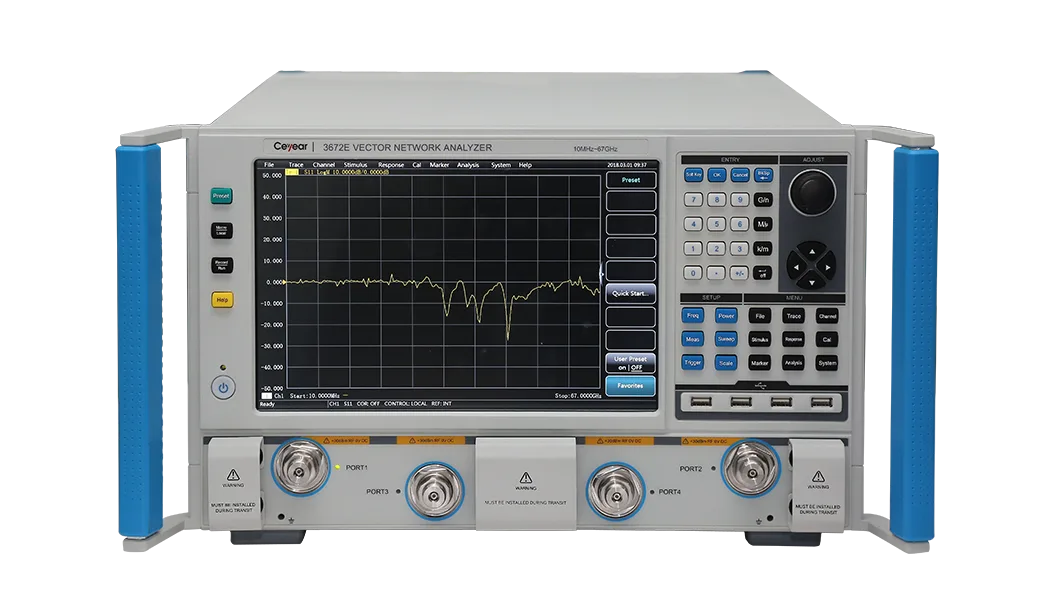
A vector network analyzer (VNA) measures how a device reflects and transmits RF energy, in both magnitude and phase, and expresses the result as S-parameters across frequency. From them you obtain return loss, VSWR, insertion loss, gain, group delay and impedance on a Smith chart. Because a VNA applies systematic error correction, calibration at the reference plane is essential: it removes the effects of cables, adapters and fixtures so that the result describes the device itself rather than the test setup.
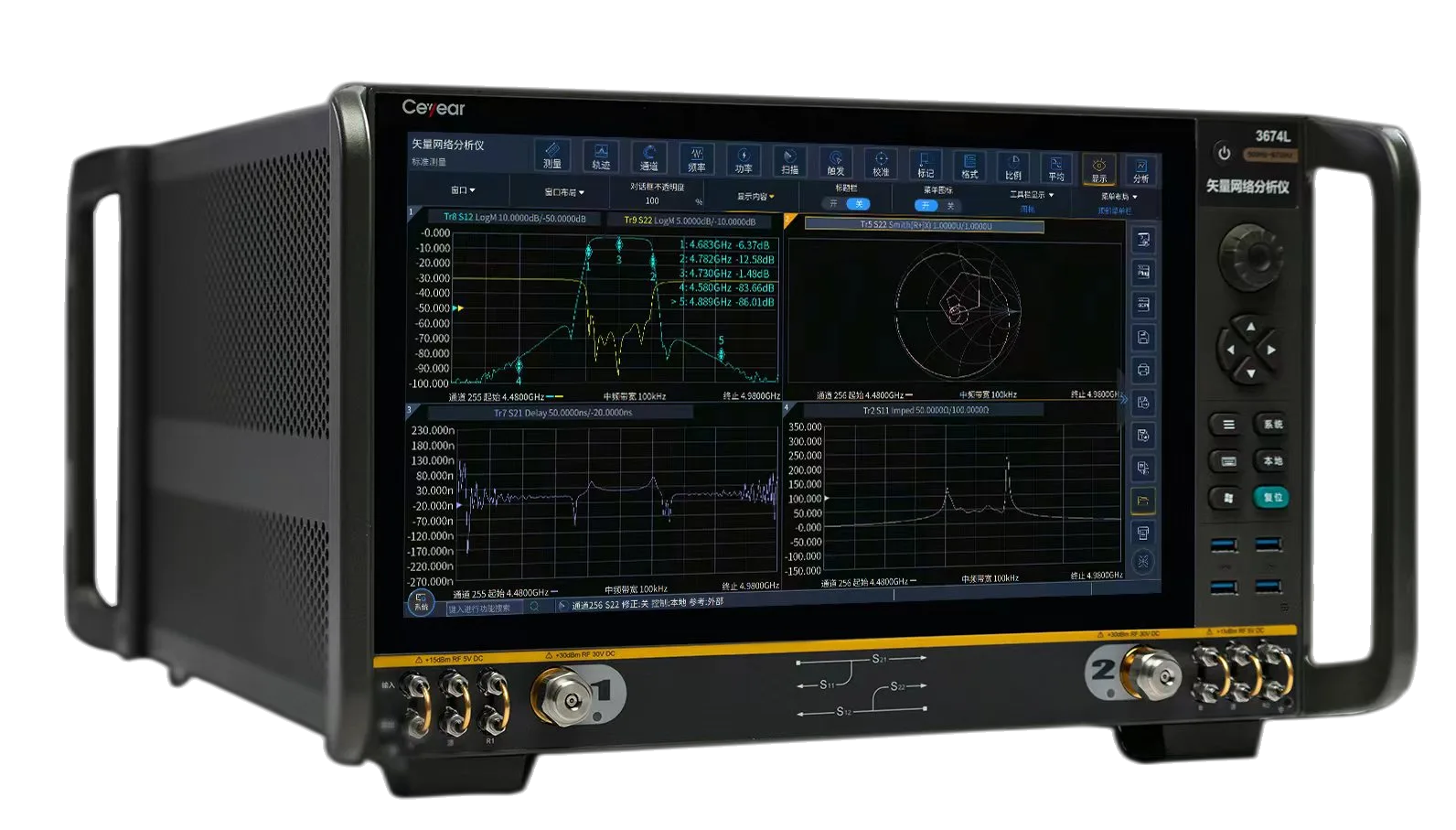
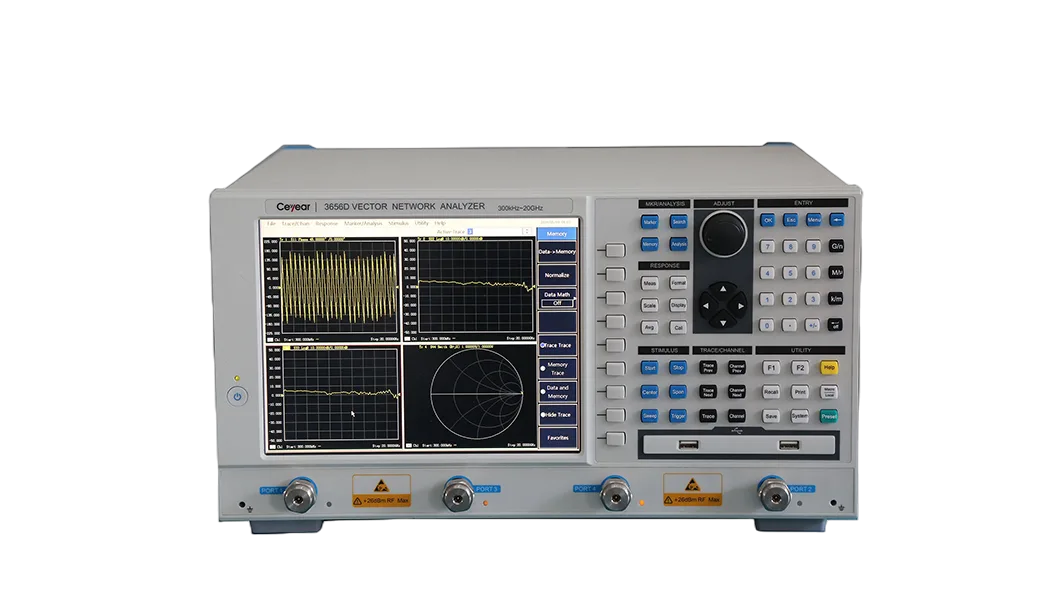
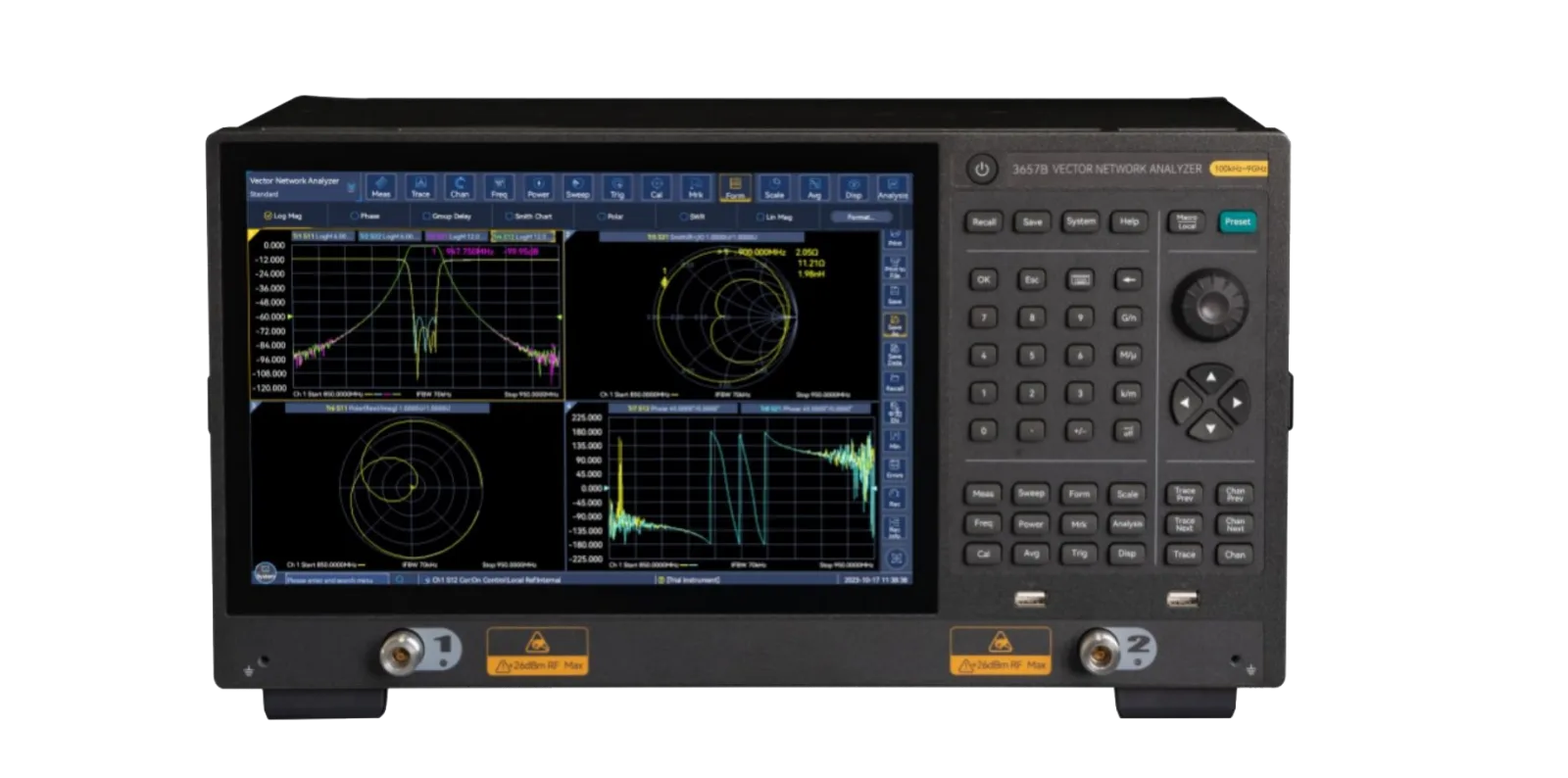
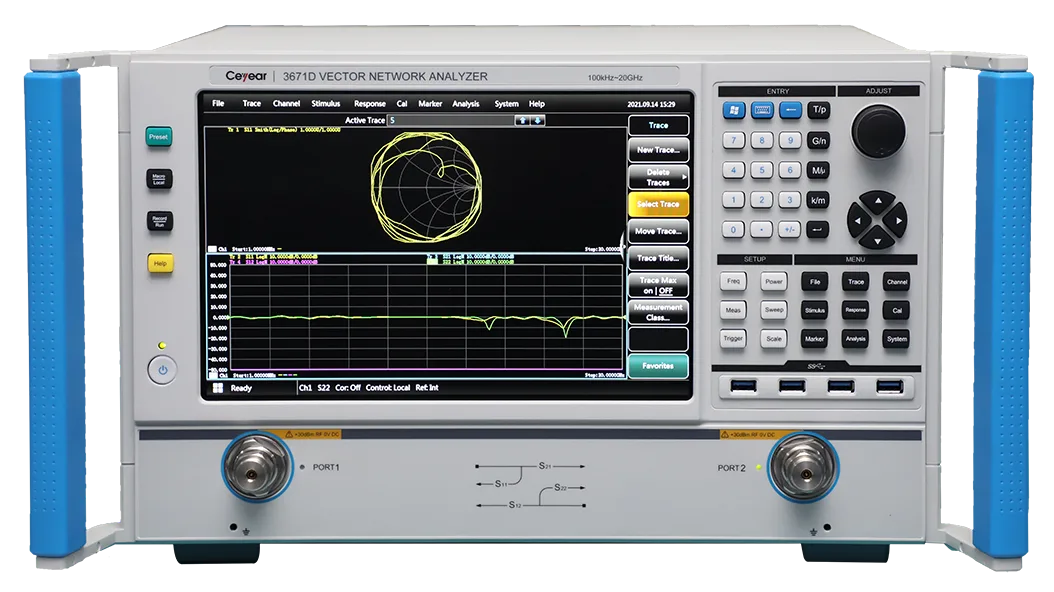
The range is broad. The 3674 runs from 10 MHz to 110 GHz (down to 500 Hz as an option), with IF bandwidth up to 30 MHz and typical dynamic range up to 142 dB. The 3672 covers 10 MHz to 67 GHz with two ports standard and a four-port option, and the 3671 offers 2- and 4-port versions. For RF and production testing, the 3657 covers 9 kHz to 26.5 GHz with a four-port option, and the 3656 reaches 125 dB dynamic range and offers a 75 Ω option for cable TV components.