Skip to content
SeaGOAT Electronics logo

Fiber Optic Splicers & OTDRs

Splicers and OTDRs for building and maintaining fiber networks

2 product families

2 instrument families

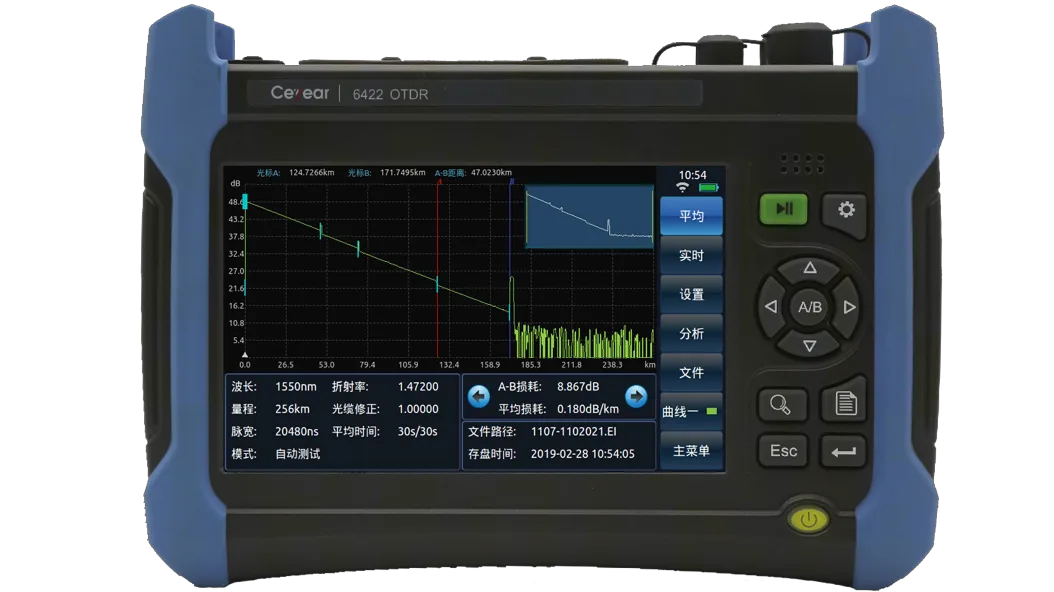
  • 6422 handheld OTDR, front view showing a fiber trace
    Fiber Optic Splicers & OTDRsHandheld

    6422 Optical Time Domain Reflectometer (OTDR)

    6422

    Handheld modular OTDR for single-mode and multimode fiber, with up to 46 dB dynamic range, 0.8 m minimum event dead zone and PON testing through 1:128 splitters.

    Wavelength
    850 – 1650 nm
    View details
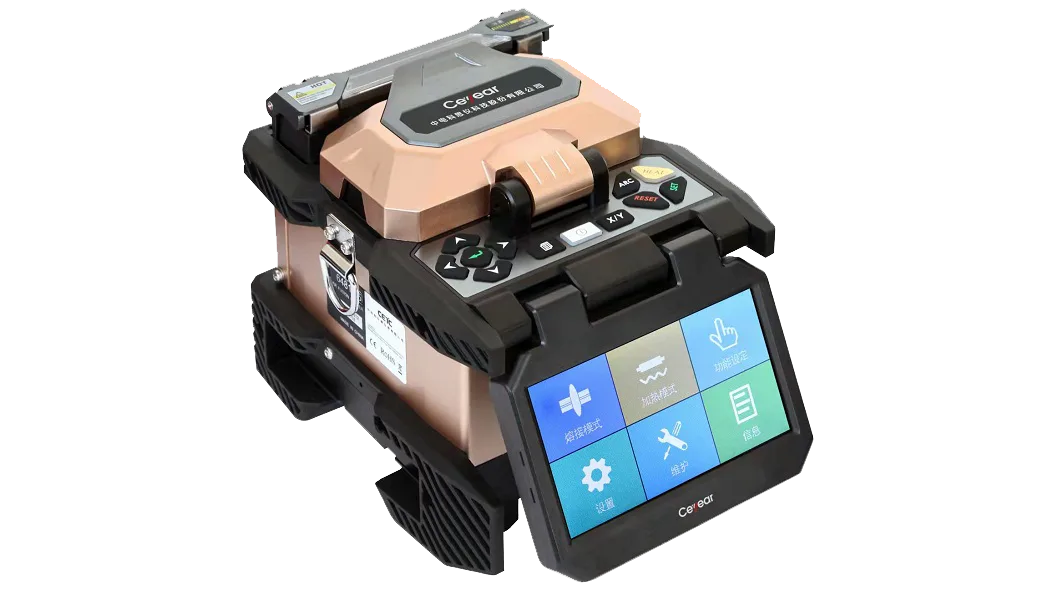
  • 6481 series optical fiber fusion splicer with touch screen open
    Fiber Optic Splicers & OTDRsPortable

    6481 Series Optical Fiber Fusion Splicer

    6481A/B · 2 models

    Compact, battery-powered fusion splicers with 7 s splicing and < 15 s heating; the 6481A offers six-motor core alignment and the 6481B four-motor cladding alignment.

    View details

About Fiber Optic Splicers & OTDRs

Fiber networks depend on two field tasks: joining fibers with minimal loss and verifying the result. A fusion splicer aligns two cleaved fibers and fuses them with an electric arc, then protects the joint with a heat-shrink sleeve. An optical time-domain reflectometer (OTDR) launches pulses into the fiber and analyzes the backscattered light, mapping splices, connectors, bends and breaks along the link with their distance and loss, which makes it the main tool for acceptance testing and fault location.

Two splicers are available. The 6481A uses six motors with core, cladding and manual alignment and a typical single-mode splice loss of 0.02 dB; the 6481B uses four motors with cladding and manual alignment and 0.03 dB typical. Both splice in 7 s and heat in 18 s. The 6420A and 6422 OTDRs offer 50 dB dynamic range, event dead zone of 0.5 m or less, ranges up to 512 km on single-mode fiber, and built-in VFL, optical power meter and light source functions.

How to choose

  1. 01

    Splicer alignment method

    Core alignment images and aligns the fiber cores themselves, giving the lowest loss on backbone and long-haul single-mode links. Cladding alignment aligns the outer diameter and is adequate for access networks, FTTx drops and multimode work at a lower cost.

  2. 02

    OTDR wavelengths

    1310 nm and 1550 nm are the standard pair for single-mode testing; 1550 nm is more sensitive to macrobends. 1625 nm or 1650 nm is used for in-service monitoring outside traffic wavelengths, and 850/1300 nm for multimode. Choose the wavelength options that match your networks.

  3. 03

    Dynamic range and dead zone

    Dynamic range determines the longest or lossiest link you can test end to end; a short dead zone lets you resolve closely spaced events such as patch panels and connectors inside a building or central office.

Frequently asked questions

Request a Consultation

Do I need a core-alignment splicer?

For long-haul, backbone and metro single-mode links, where every hundredth of a dB adds up across many splices, core alignment such as on the 6481A is the usual choice. For FTTx access networks, short drops and multimode installations, cladding alignment as on the 6481B typically delivers acceptable loss at a lower investment.

What is the difference between event dead zone and attenuation dead zone?

After a reflective event, the OTDR receiver needs time to recover. The event dead zone is the minimum distance after which a second reflective event can be detected as separate. The attenuation dead zone is the longer distance after which the loss of that second event can be measured. Both matter when connectors are close together.

How do I request a quotation for splicers or OTDRs?

Use the contact form to tell us the network type (long-haul, metro, FTTx, multimode), the fiber types, the OTDR wavelengths and distances you need, any accessories such as cleavers, quantity and destination country. SeaGOAT's sales team reviews the request and replies with a quotation or with questions to confirm the configuration.