5G NR raised the bar for RF test. Carriers are wider, up to 100 MHz in FR1 and 400 MHz in FR2, modulation orders are higher, and millimeter-wave bands bring higher path loss and tighter tolerances. Transmitters must meet EVM, ACLR and spectral emission mask limits, while receivers must keep sensitivity and selectivity in the presence of strong blockers. Massive MIMO and beamforming add the challenge of keeping many channels aligned in amplitude and phase, and research toward 6G is already exploring sub-THz frequencies.
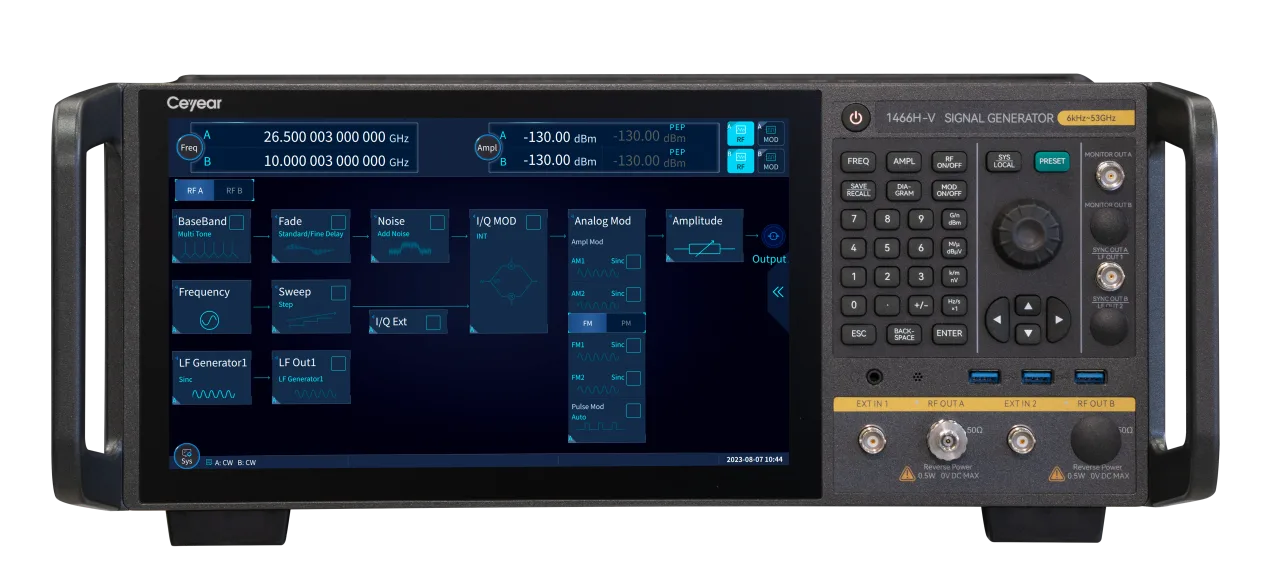
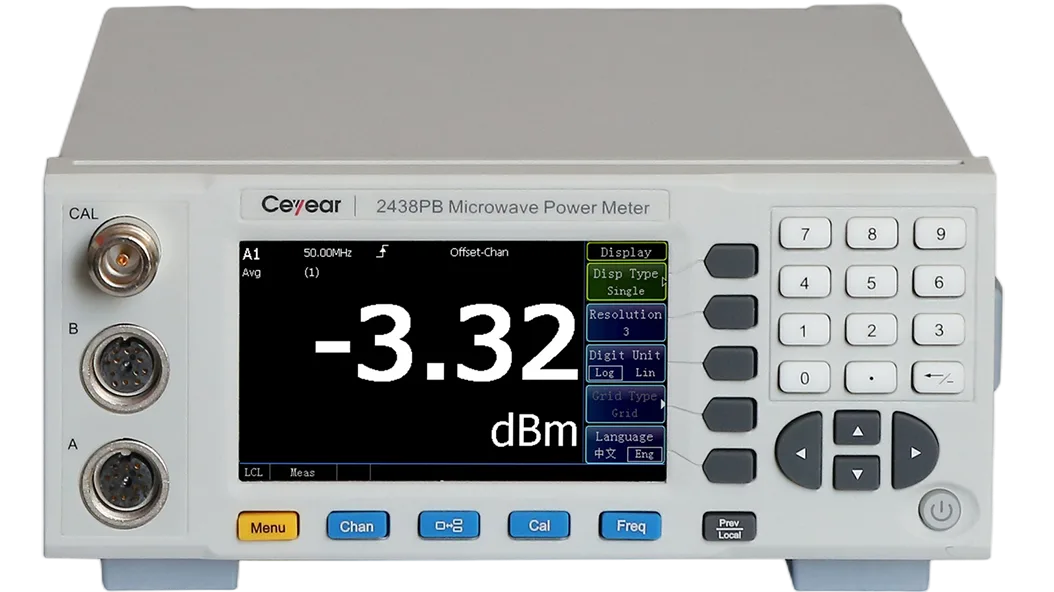
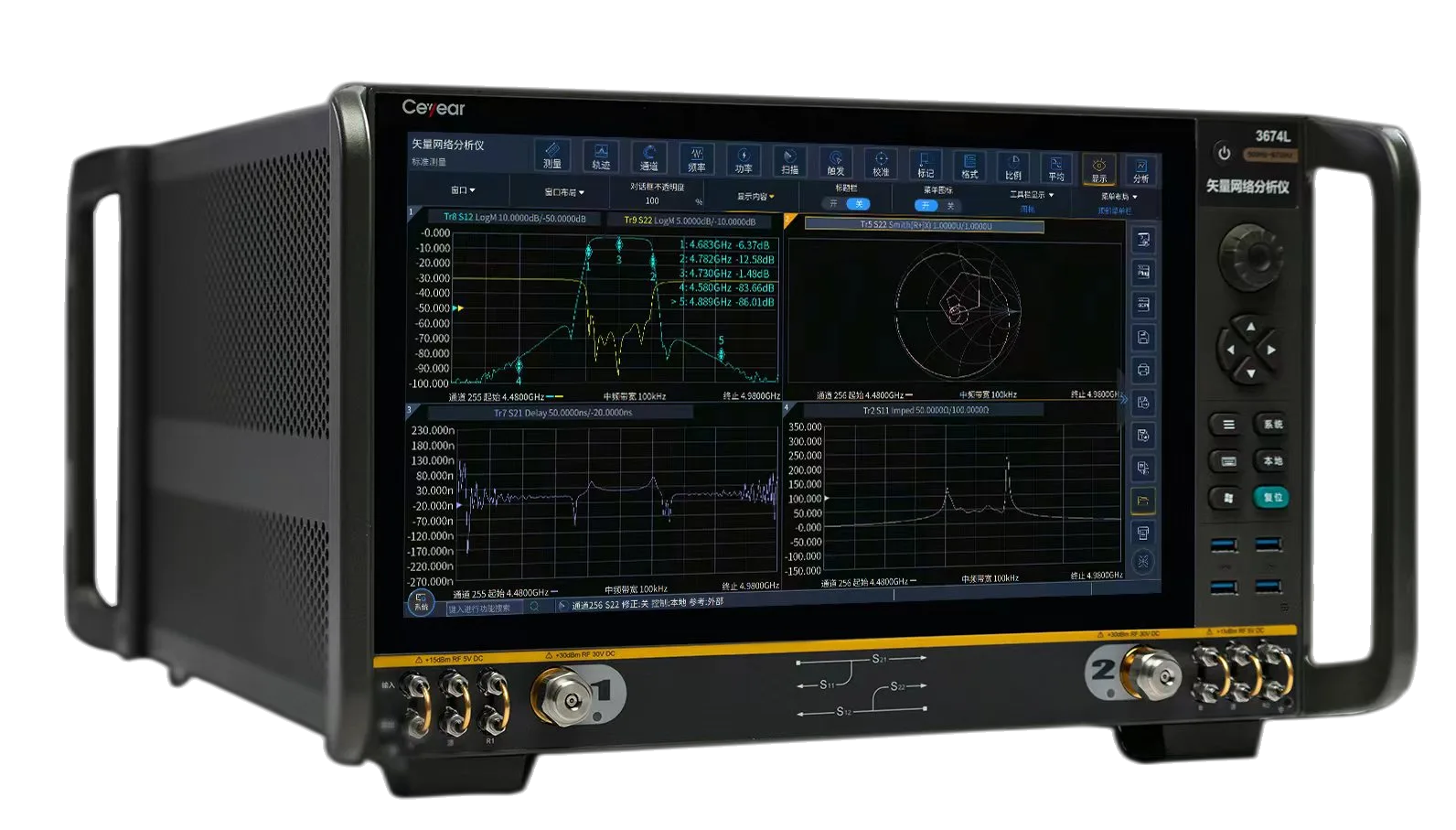
In the lab, a vector signal generator produces standard-compliant 5G NR waveforms to test receivers, while a signal analyzer with enough analysis bandwidth demodulates transmitter output to report EVM, ACLR and occupied bandwidth. Multi-channel or cascaded generators support MIMO and beamforming tests. Vector network analyzers characterize filters, antennas, power amplifiers and front-end modules, including gain compression and mixer measurements, and power sensors provide the absolute reference for transmitter output and calibration of the test system itself.
In the field, installation and maintenance crews need portable tools. Handheld spectrum analyzers with real-time analysis and 5G NR or LTE demodulation help verify cells and track down interference, and combined cable and antenna analyzers check feeders and jumpers with return loss and distance-to-fault. For microwave backhaul and early 6G work, signal analyzers and VNAs reach 110 GHz in coaxial form, and the 4082 can be extended further with external mixers.