Aerospace and satellite systems operate across wide frequency ranges, from L and S band telemetry to Ku, Ka and higher bands for broadband satellite links, and they demand margin at every stage. Radar transmitters generate short, high-power pulses whose shape, timing and spectrum must be verified. Satellite receivers depend on very low noise figure to close the link budget, and payload components must be characterized precisely before integration, because once in orbit nothing can be adjusted.
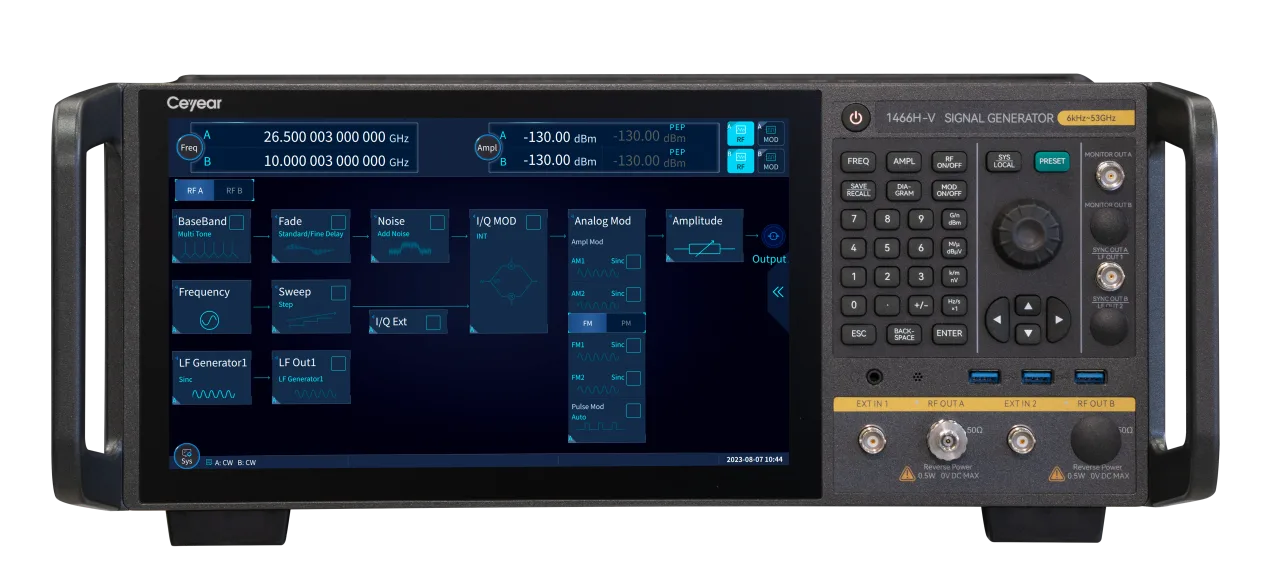
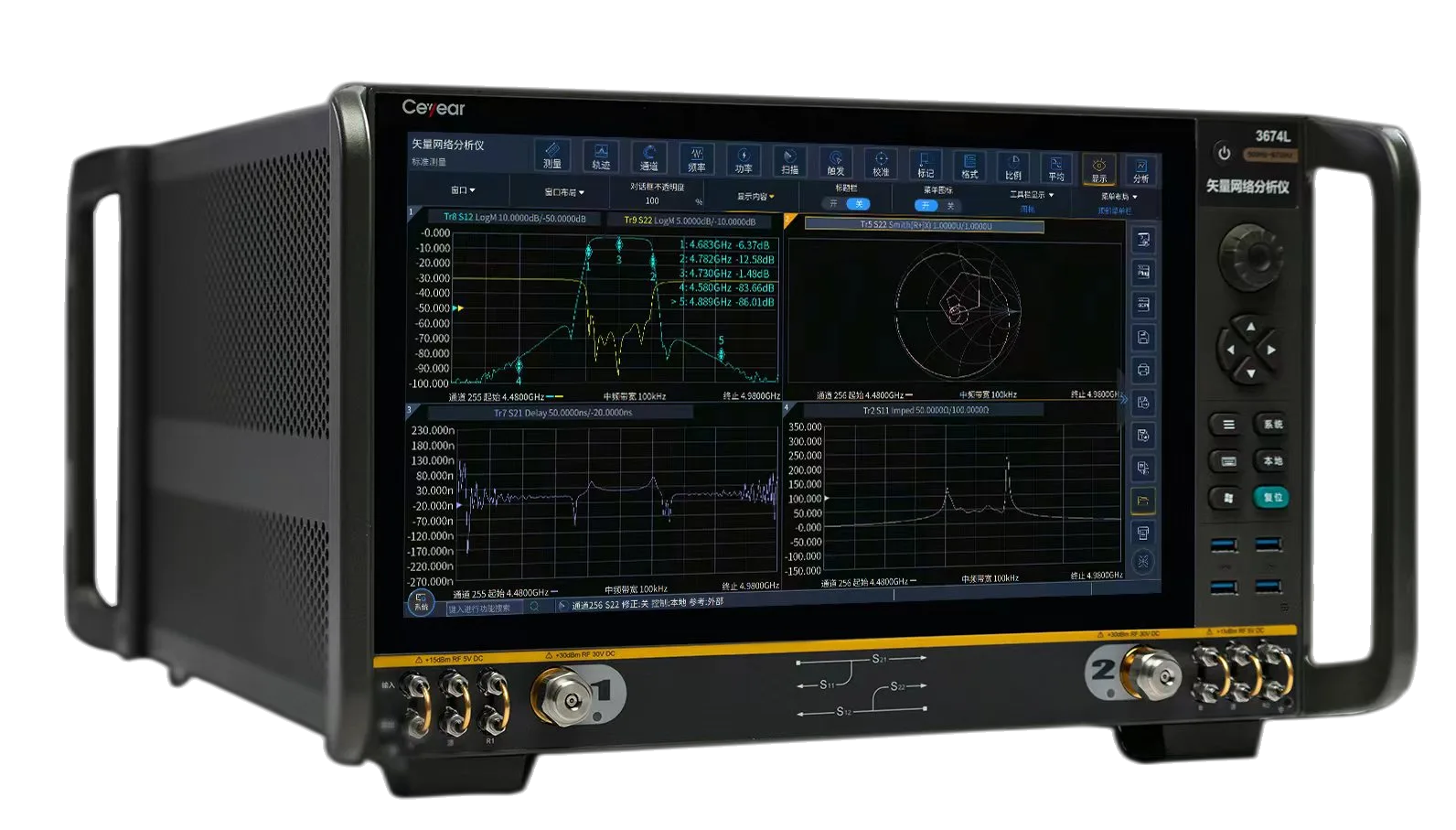
Signal analyzers with pulse and FMCW analysis measure pulse width, rise time, repetition interval and chirp linearity, while wide analysis bandwidth captures complete radar waveforms. Signal generators with pulse modulation, and agile generators that switch frequency in nanoseconds, simulate targets and complex emitter scenarios for receiver testing. Vector network analyzers with pulsed S-parameter capability characterize T/R modules under realistic operating conditions, and mixer measurements verify the frequency converters used in payloads and ground terminals.
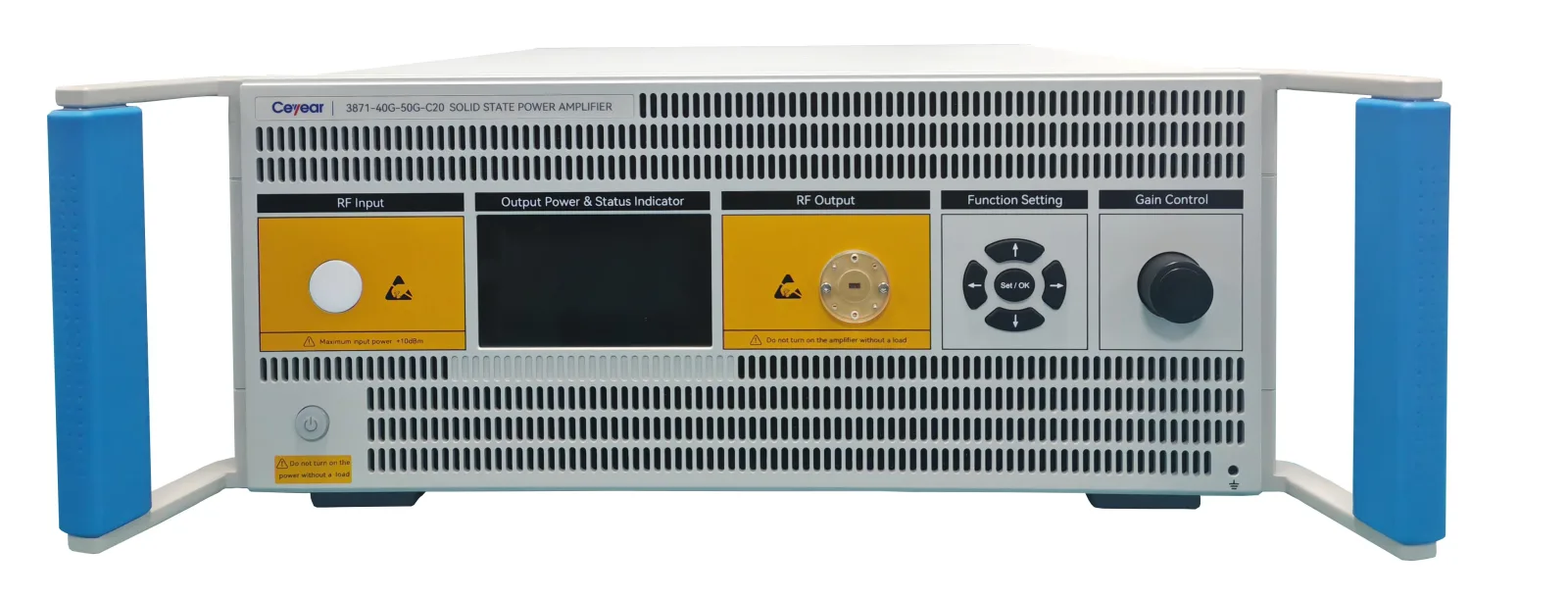
Noise figure analyzers quantify the LNAs and down-converters at the front of every satellite receiver, and peak power sensors verify the output of pulsed transmitters. Solid-state power amplifiers provide the high signal levels needed for component stress tests and EMC qualification of airborne and space equipment. For millimeter-wave payloads and research, waveguide power sensors and components extend measurements well beyond the coaxial range, up to 750 GHz for power sensors.