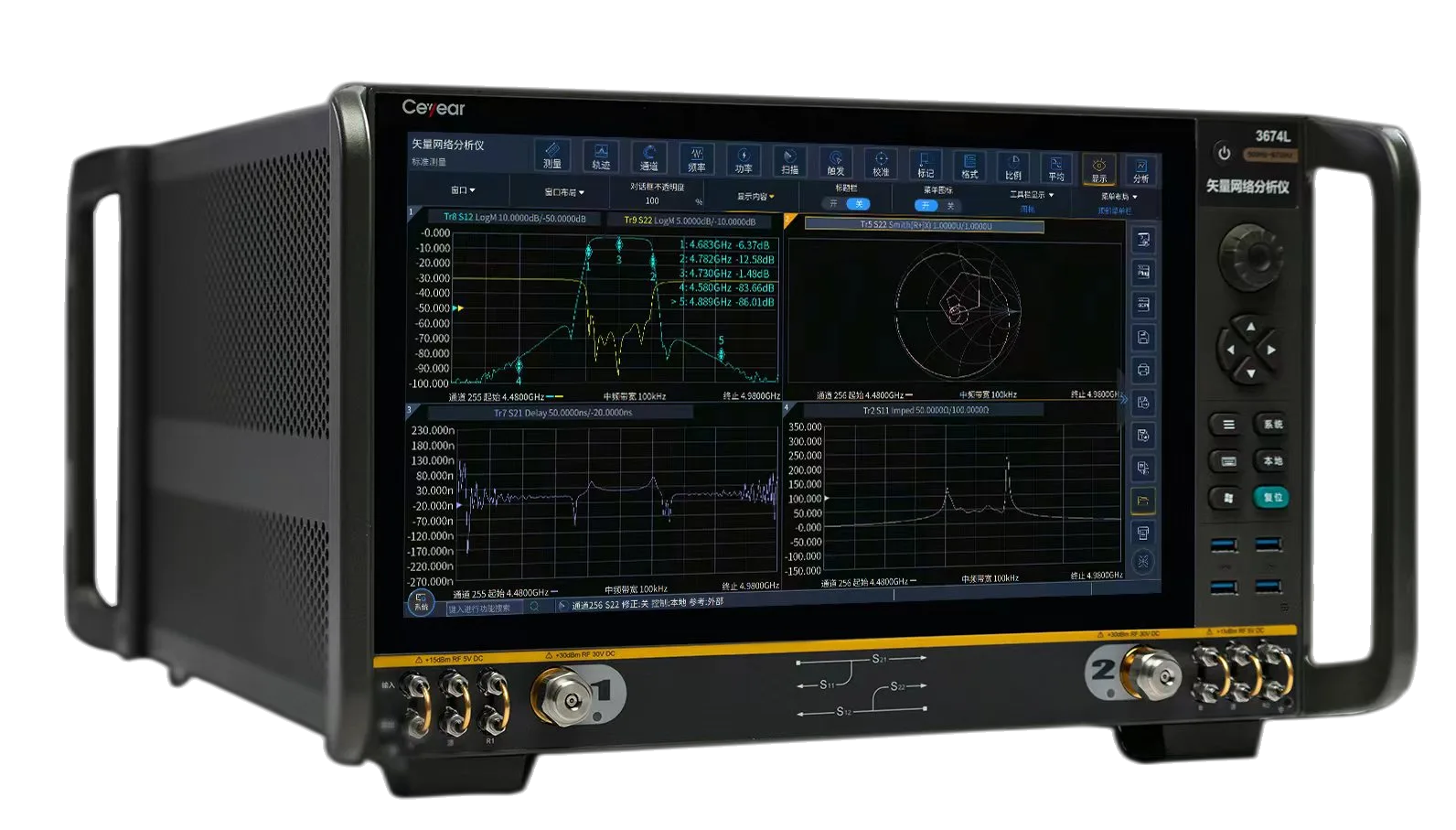
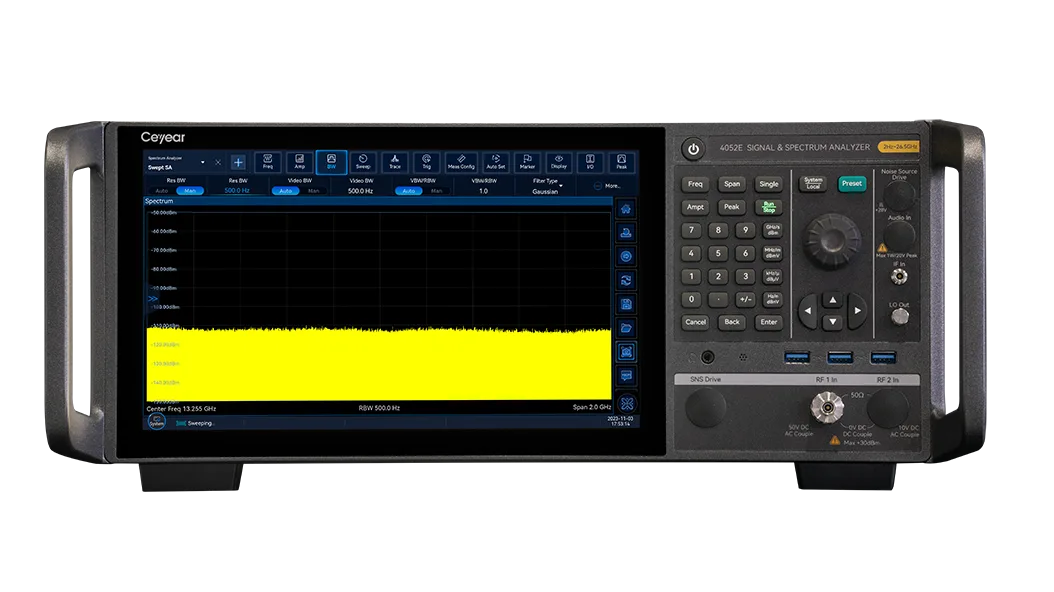
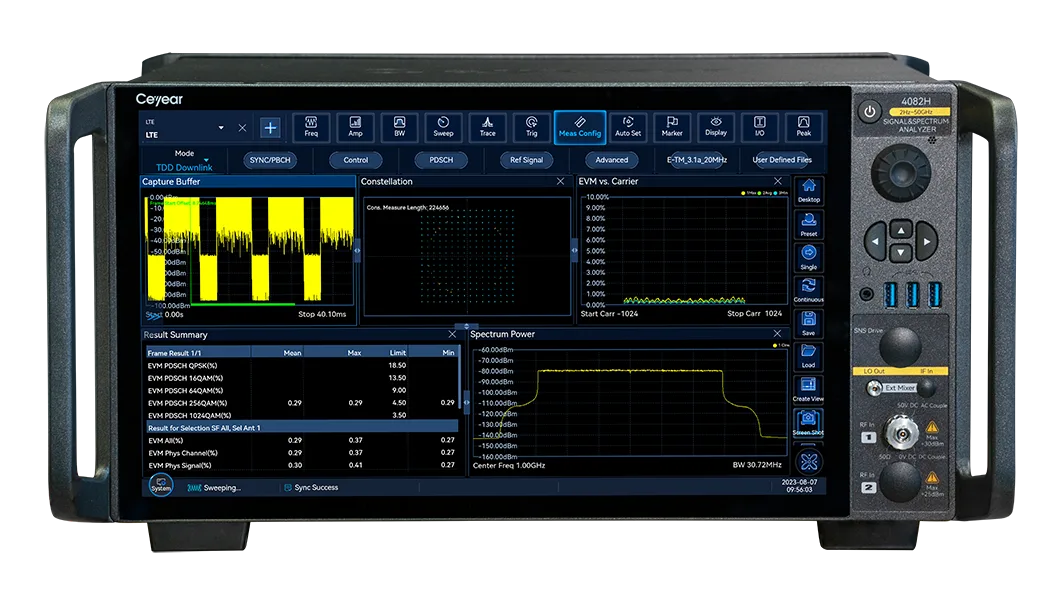
University and research laboratories face a particular balance. Instruments must be versatile enough to serve many projects and students over years of use, yet capable enough to support publishable results at the frontier, often at frequencies or bandwidths beyond commercial products. Research in antennas, metamaterials, new semiconductor devices, sub-THz communications and integrated photonics regularly pushes the limits of frequency range, dynamic range and calibration technique.
A vector network analyzer with wide coverage is often the most used instrument in an RF research lab, measuring antennas, materials, filters and on-wafer devices. With VNAs reaching 110 GHz and waveguide calibration kits and components up to 500 GHz and beyond, groups can characterize millimeter-wave and sub-THz structures. Signal analyzers with external frequency extension and wide analysis bandwidth support experimental communication links and radar prototypes.
Teaching labs benefit from instruments that make concepts visible: an oscilloscope with integrated logic, bus and spectrum analysis shows the same signal in several domains, while a spectrum analyzer and signal generator pair lets students explore modulation, noise and distortion hands-on. In photonics, optical spectrum analyzers, tunable lasers and lightwave component analyzers support research on lasers, modulators and photodetectors for high-speed optical links.